
About the conference
Emerging Light Emitting Materials
EMLEM26 will take place in the Halkidiki area from the 20th to the 23th of September 2026
Topics to be covered by the conference:
- Perovskite Nanomaterials
- III-V Quantum Dots
- Zn-Chalcogenide Quantum Dots
- IR-emissive Nanomaterials
- Metal Halides
- Two-dimensional light emitting materials
Invited Speakers
Uri Banin
Professor Uri Banin is the incumbent of the Larisch Memorial Chair at the Institute of Chemistry and the Center for Nanoscience and Nanotechnology at the Hebrew University of Jerusalem (HU). Dr. Banin was the founding director of the Harvey M. Kreuger Family Center for Nanoscience and Nanotechnology (2001-2010) and led the program of the Israel National Nanotechnology Initiative at HU (2007-2010). He served on the University’s Executive Committee and on its board of managers and was a member of the board of Yissum. He served on the scientific advisory board of Nanosys. In 2009 Banin was the scientific founder of Qlight Nanotech, a start-up company based on his inventions, developing the use of nanocrystals in display and lighting applications. Since 2013, Banin is an Associate Editor of the journal Nano Letters. His distinctions include the Rothschild and Fulbright postdoctoral fellowships (1994-1995), the Alon fellowship for young faculty (1997-2000), the Yoram Ben-Porat prize (2000), the Israel Chemical Society young scientist award (2001), the Michael Bruno Memorial Award (2007-2010), and the Tenne Family prize for nanoscale science (2012). He received two European Research Council (ERC) advanced investigator grant, project DCENSY (2010-2015), and project CoupledNC (2017-2022). Banin’s research focuses on nanoscience and nanotechnology of nanocrystals and he authored over 180 scientific publications in this field that have been extensively cited.
Yehonadav Bekenstein
Francesco Di Stasio
Dr. Francesco Di Stasio obtained a Ph.D. in Physics at University College London (UK) in 2012. He then worked as a research Scientist at Cambridge Display Technology (Sumitomo Chemical group, UK) until he undertook postdoctoral research at the Istituto Italiano di Tecnologia (IIT, Italy). In 2015 he was awarded a Marie Skłodowska-Curie Individual Fellowship at the Institute of Photonic Sciences (ICFO, Spain). Since 2020 he is Principal Investigator of the Photonic Nanomaterials group at IIT after being awarded an ERC Starting grant. Francesco is a materials scientist with more than 10 years of research experience in optoelectronics.
Current research interests and methodology: Nanomaterials for classical and non-classical light-sources: This research activity focuses on the investigation of synthetic routes to obtain highly luminescent semiconductor colloidal nanocrystals and exploit such material in light-emitting diodes (LEDs). Here, we study how chemical treatments of colloidal nanocrystals can promote enhanced performance in devices, and physico-chemical properties of nanocrystals (e.g. self-assembly and surface chemistry) can be exploited to fabricate optoelectronic devices with innovative architectures. Novel methods and materials for light-emitting diodes: The group applies materials science to optoelectronics by determining which fabrication parameter lead to enhanced performance in LEDs. In order to transition from classical to non-classical light-sources based on colloidal nanocrystals, the group is developing novel methods for controlling the deposition and positioning of an individual nanocrystals in the device. Both “top-down” and “bottom-up” approaches are investigated.
Jacky Even
Jacky Even was born in Rennes, France, in 1964. He received the Ph.D. degree from the University of Paris VI, Paris, France, in 1992. He was a Research and Teaching Assistant with the University of Rennes I, Rennes, from 1992 to 1999. He has been a Full Professor of optoelectronics with the Institut National des Sciences Appliquées, Rennes,since 1999. He was the head of the Materials and Nanotechnology from 2006 to 2009, and Director of Education of Insa Rennes from 2010 to 2012. He created the FOTON Laboratory Simulation Group in 1999. His main field of activity is the theoretical study of the electronic, optical, and nonlinear properties of semiconductor QW and QD structures, hybrid perovskite materials, and the simulation of optoelectronic and photovoltaic devices. He is a senior member of Institut Universitaire de France (IUF).
Mercouri Kanatzidis
Professor MERCOURI G. KANATZIDIS Charles E. and Emma H. Morrison Chair Department of Chemistry, Northwestern University, Evanston, IL 60208 Tel. (847)-467-1541, FAX (847)-491-7713 EDUCATION AND TRAINING B.S. Chemistry, November 1979, Aristotle University of Thessaloniki Ph.D. Chemistry, 1984, University of Iowa, Postdoctoral Associate, 1985, University of Michigan Postdoctoral Associate, 1987, Northwestern University RESEARCH AND PROFESSIONAL EXPERIENCE 8/06- present: Professor of Chemistry, Northwestern University (joint appointment with Argonne National Laboratory). 6/93-7/06: Professor of Chemistry, Michigan State University. 7/91-6/93: Associate Professor, Michigan State University. 7/87-6/91: Assistant Professor, Michigan State University. Awards and honors: Presidential Young Investigator Award. National Science Foundation, 1989-1994. ACS Inorganic Chemistry Div. Award: EXXON Faculty Fellowship in Solid State Chemistry, 1990. Beckman Young Investigator, 1992-1994. Alfred P. Sloan Fellow 1991-1993. Camille and Henry Dreyfus Teacher Scholar 1993-1998. Michigan State University Distinguished Professor 1998. Sigma Xi Senior Meritorious Faculty Award 2000. University Distinguished Professor MSU 2001. John Simon Guggenheim Foundation Fellow 2002. Alexander von Humboldt Prize, 2003. Morley Medal, American Chemical Society, Cleveland Section, 2003. Charles E. and Emma H. Morrison Professor Northwestern University 2006. Materials Research Society Fellow 2010. American Association for the Advancement of Science Fellow 2012. Chetham Lecturer Award, University of California Santa Barbara, 2013. Einstein Professor Chinese Academy of Sciences 2014. International Thermoelectric Society Outstanding Achievement Award 2014. PROFESSIONAL SERVICE AND RECOGNITION Chair-Elect Solid State Subdivision, Division of Inorganic Chemistry, ACS, 1997-1998. Editorial Advisory Board Chemistry of Materials, 1993-2000. Editorial Advisory Board Inorganic Chemistry 1994-1997. Editorial Advisory Board Journal of Alloys and Compounds 1996-2012. Editorial Advisory Board Energy and Environmental Science 2012-present. Editor-in-Chief: Journal of Solid State Chemistry. Chairman Solid State Chemistry Subdivision, American Chemical Soc 1998-1999. American Chemical Society, Div. of Chemical Education, Examinations Institute: 1996 and 2003 Inorganic Chemistry Committee, DOE Review Panelist 2004, 2007, 2010, 2012 NSF Panelist 2006, 2008, 2010, 2011, 2012. PUBLICATIONS (Publications >800, citations >26,000, H index 80) Total number of graduate students graduated: 47 Total number of postdocs advised: 75 Ten female group-alumnae hold faculty positions in American and foreign universities. Graduate Advisor: Dimitri Coucouvanis, (U. Michigan) Postdoctoral Advisor: Tobin J. Marks (Northwestern University)
Brahim LOUNIS
Liberato Manna
Bio Professional Preparation M.S. in Chemistry, with Honours, University of Bari, Italy, 1996 Ph.D. in Chemistry, University of Bari, Italy, 2001 Research interests Prof. L. Manna is an expert of synthesis and assembly of colloidal nanocrystals. His research interests span the advanced synthesis, structural characterization and assembly of inorganic nanostructures for applications in energy-related areas, in photonics, electronics and biology.
Peter Reiss
Peter Reiss is researcher at the Interdisciplinary Research Institute of Grenoble (IRIG), France, and Head of the Laboratory Synthesis, Structure and Properties of Functional Materials (STEP). He graduated from University of Karlsruhe (Germany), and earned his PhD in Inorganic Chemistry under the supervision of Prof. Dieter Fenske (2000). His research activities focus on the synthesis and properties of colloidal semiconductor quantum dots and metal halide perovskites (nanoparticles and thin films). The studied applications range from biological imaging / detection over LEDs and displays to new strategies for energy conversion (photovoltaics, thermoelectrics, photocatalysis) and storage. Dr. Reiss acts as Associate Editor for Nanoscale Research Letters and Frontiers in Materials - Energy Materials, and is Editorial Board Member of Scientific Reports. He co-organizes the biennial conference NaNaX – Nanoscience with Nanocrystals (cf. http://nanax.org).
Qing Shen
Prof. Qing Shen received her Bachelor’s degree in physics from Nanjing University of China in 1987 and earned her Ph.D. degree from the University of Tokyo in 1995. In 1996, she joined the University of Electro-Communications, Japan and became a full professor in 2016. In 1997, she got the Young Scientist Award of the Japan Society of Applied Physics. In 2003, she got the Best Paper Award of the Japan Society of Thermophysical Properties and the Young Scientist Award of the Symposium on Ultrasonic Electronics of Japan. In 2014, she got the Excellent Women Scientist Award of the Japan Society of Applied Physics. Her current research focuses on three interconnected areas: (1) the synthesis, optical properties, and optoelectronic applications of nanocrystal quantum dots; (2) mechanistic investigations into photoexcited carrier dynamics—such as hot carrier relaxation, multiple exciton generation, interfacial charge transfer, and recombination—to improve the efficiency of quantum dot, perovskite, and organic solar cells, as well as light-emitting devices (LEDs); (3) interface engineering for enhancing the performance of photovoltaics and LEDs. Over the past five years, she has published more than 100 high-impact papers in leading journals such as Nature Energy, Chemical Society Reviews, Advanced Energy Materials, Advanced Materials, Journal of the American Chemical Society, and Angewandte Chemie International Edition, which have been cited over 12,000 times.
Marios Zacharias
Marios Zacharias is a computational materials scientist and currently an Assistant Professor at the Cyprus Institute. Prior to this, he held a Marie Skłodowska-Curie postdoctoral fellowship at the FOTON Institute, INSA Rennes from 2023-2025. He earned his Ph.D. in Materials Science from the University of Oxford in 2017 and continued there as a postdoctoral researcher. In 2019, he joined the NOMAD Laboratory at the Fritz Haber Institute of the Max Planck Society in Berlin. From 2020 to 2021, he led the simulation group of RUNMS at the Cyprus University of Technology.
His research focuses on electronic structure theory and high-performance computing for the accurate and high-throughput modelling of anharmonicity, electron-phonon interactions, and vibronic effects in condensed matter systems. He is the developer of the EPW/ZG module in Quantum ESPRESSO and the creator, with Prof. F. Giustino, of the Special Displacement Method (SDM) for finite-temperature electronic structure calculations. Marios has also introduced a method for multiphonon diffuse scattering, enabling the interpretation of thermal and ultrafast phenomena in solids. His current work explores machine learning approaches for efficient simulations of anharmonicity and local disorder in halide and oxide perovskites.
Conference Manager
Alba Chover
Conference Manager
Neus Pons
Conference Onsite
Sponsors
Networking Activities
The EMLEM26 conference offers the following social activities:
Enjoy a full-day Boat Trip exploring the beautiful Halkidiki area on Sunday, September 20th.
Bus departure: 08:30 from the Aegean Melathron Hotel. Round-trip bus transportation between the hotel and Chrousso Port is included.
The activity is not included in the conference ticket. Remember to purchase your ticket from your nanoge profile.

Location
Conference venue
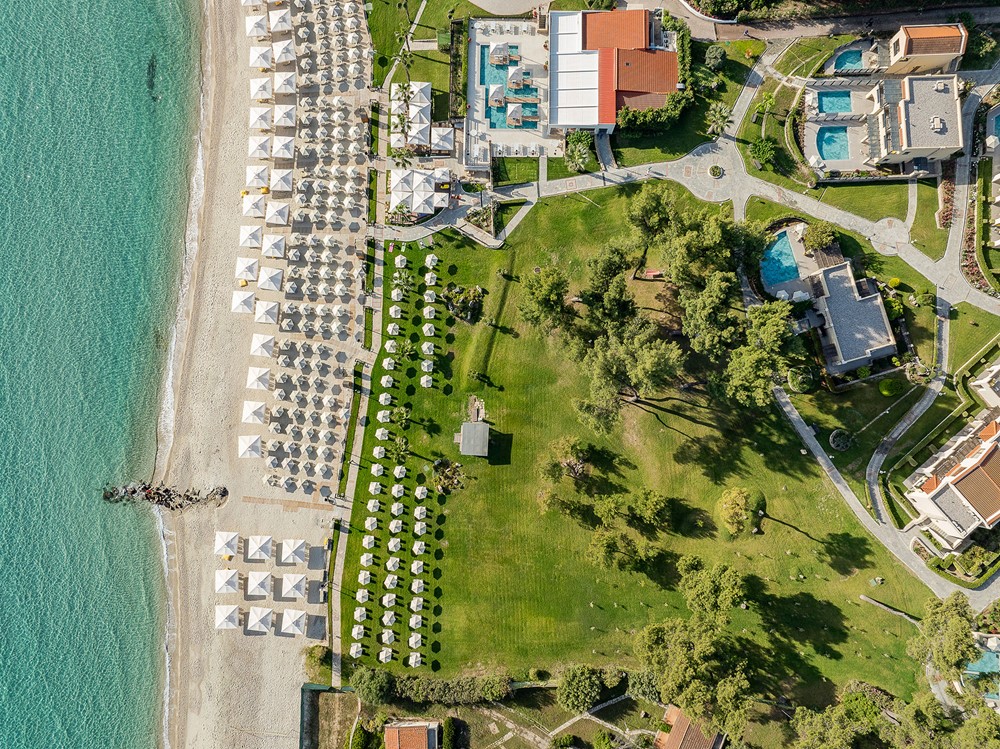
Aegean MelathronKalithea-Kryopigi, Solinas, Kallithea 630 77, Greeceemlem26@nanoge.org
Organizers
Maryna Bodnarchuk
Grigorios Itskos
Grigorios Itskos carried out his PhD studies at SUNY at Buffalo, USA (Ph.D. in Physics 2003) within the newly-born field of spintronics. He worked as postdoctoral researcher (Imperial College London, 2003-2007) focusing on photophysical studies of hybrid organic-inorganic semiconductors. In September 2007 he was hired as a faculty member at the Department of Physics, University of Cyprus (Lecturer 2007-2011, Assistant Professor 2011- 2017, Associate Professor 2017- now). His group research activities focus on the spectroscopy and photonic applications of semiconductor nanomaterials.
Maksym Kovalenko
Maksym Kovalenko has been a tenure-track Assistant Professor of Inorganic Chemistry at ETH Zurich since July 2011 and Associate professor from January 2017. His group is also partially hosted by EMPA (Swiss Federal Laboratories for Materials Science and Technology) to support his highly interdisciplinary research program. He completed graduate studies at Johannes Kepler University Linz (Austria, 2004-2007, with Prof. Wolfgang Heiss), followed by postdoctoral training at the University of Chicago (USA, 2008-2011, with Prof. Dmitri Talapin). His present scientific focus is on the development of new synthesis methods for inorganic nanomaterials, their surface chemistry engineering, and assembly into macroscopically large solids. His ultimate, practical goal is to provide novel inorganic materials for optoelectronics, rechargeable Li-ion batteries, post-Li-battery materials, and catalysis. He is the recipient of an ERC Consolidator Grant 2018, ERC Starting Grant 2012, Ruzicka Preis 2013 and Werner Prize 2016. He is also a Highly Cited Researcher 2018 (by Clarivate Analytics).
Poster prizes
One prize of 150€ Fundació Scito
Yoga Class - Wednesday, september 23th
Join us for a refreshing Yoga Class to start the day feeling balanced and energized.
The session will take place outdoors on the lawn area in front of the beach at the Aegean Melathron Hotel, on Wednesday, September 23rd at 9:30 AM.
Participants should arrive by 09:20 at the outdoor lawn area in front of the beach, within the hotel grounds
This activity is complimentary upon confirmation of attendance. Remember to add the "Yoga Class" ticket at 0 cost from your nanoge profile.